Digital Marketing
15 B2B Buying Signals Worth Acting On Within 24 Hours
Nikhil Adiga · · 8 min read
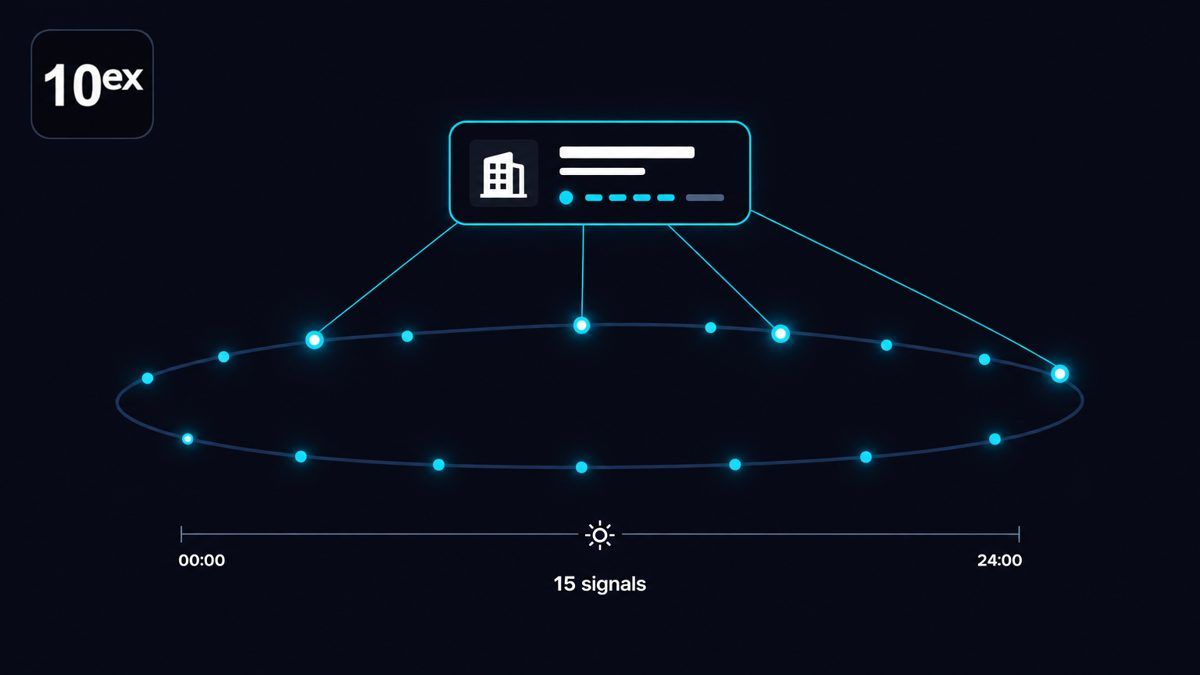
B2B buying signals are actions or events that show an account is moving toward a purchase: a pricing page visit, a new VP of Sales, a fresh funding round, a job post for the role your product replaces. The ones worth acting on within 24 hours are the signals that show active evaluation or a new budget owner, because their value drops by the hour. Below are 15 of them, with what to do when each one fires.
Speed matters more than most teams admit. Harvard Business Review's 2011 audit of 2,241 companies found that firms contacting a lead within one hour were nearly seven times more likely to qualify it than firms waiting another hour, and more than 60 times more likely than firms waiting 24 hours or longer. The problem has not gone away: in a March 2026 field test by Workato, more than 99% of 114 B2B companies failed to respond to a demo request within five minutes, and only 31% called back at all, after an average of 14 hours and 29 minutes.
What are examples of buying signals?
Examples of buying signals include repeat pricing page visits, demo or trial requests, comparison page views, a new executive hire, a funding announcement, hiring for a role your product supports, a public complaint about a current tool, and several people from one account engaging in the same week. They fall into three groups: first-party (on your own site and product), people and company changes, and public intent (posts, reviews, job listings). The list below ranks the 15 that deserve a same-day response.
1. A demo or contact request is the hottest signal you will ever get
A hand-raise means the buyer has already done most of the work. Gartner research from 2025 describes buying groups of five to 16 people across up to four functions, so the person who filled in the form usually needs to bring something back to colleagues. What to do: respond in minutes, not hours, with a specific time slot and one line showing you looked at their company.
2. Repeat pricing page visits mean a budget conversation is happening
One pricing visit is curiosity. Three visits in a week from the same company is someone building a business case. What to do: send the person or team a short note that answers the question pricing pages never answer well: what a team their size actually pays and what it replaces.
3. Comparison or alternatives page views mean they are shortlisting
Someone reading your "vs." or "alternatives" content is choosing between options right now. What to do: reach out with a one-paragraph switching story: what changes in week one, what migrates, and what it costs to try.
4. Multiple people from one account engaging in the same week signals a buying group
When three or more people from one domain read your content, visit the site or open your emails within days of each other, a committee has formed. What to do: map the roles, then send each person a message tuned to their job instead of one generic sequence to all of them.
5. A trial user hitting a usage limit is ready for a sales conversation
Hitting a seat, credit or feature cap means the product already proved value. What to do: offer a call framed around the limit they hit, not a generic "how is the trial going?" check-in.
6. A new VP of Sales, Head of Growth or CRO resets the vendor stack
New leaders usually get a short window to show change and a mandate to fix pipeline. What to do: congratulate them in one line, then offer one concrete idea for their first 90 days. Skip the pitch deck.
7. A former champion starting at a new company is a warm intro you already earned
People who liked your product at one job tend to bring it to the next. What to do: message them within a day of the move with a simple "want the same setup here?" note.
8. A fresh funding round creates budget and pipeline pressure at the same time
New capital comes with growth targets that the board will check soon. What to do: tie your outreach to the specific goal funding announcements usually mention, such as expanding into a new market or doubling the sales team.
9. A job post for SDRs or BDRs shows a pipeline problem they are trying to solve with headcount
A company hiring outbound reps has admitted it needs more pipeline. What to do: reach the hiring manager with the cost of ramping a new rep against the cost of a system that runs outbound now, and offer to show the difference.
10. A public complaint about a current tool is an open door
Founders vent on LinkedIn, Reddit and review sites when a tool breaks their workflow. What to do: reply helpfully in public first, without pitching, then follow up privately if they engage.
11. Questions in communities that match your use case show early-stage intent
A thread asking "how are you handling outbound with a two-person team?" is a buyer describing their problem in their own words. What to do: answer the question fully and honestly; a useful answer earns more meetings than a link.
12. A competitor's contract renewal window opens a switching moment
Annual contracts create a narrow window where switching is cheap. What to do: when you learn a renewal date from a prospect or call notes, set outreach for 60 to 90 days before it and lead with migration help.
13. Expansion into a new market or segment means new pipeline targets
New offices, new regions and new product lines all need fresh pipeline fast. What to do: offer a specific play for that new market, like a target account list sample for the region they announced.
14. Tech stack changes reveal a project in motion
A company adding a new CRM or removing a tool from its site is mid-project, which means budget is unlocked and decisions are open. What to do: position your product as the piece that makes their new stack pay off.
15. Re-engagement from a closed-lost account means the original blocker moved
When an account that said "not now" starts opening emails or visiting the site again, timing, budget or the decision maker has changed. What to do: reference the earlier conversation directly and ask what changed.
Which buying signals should you act on first?
Act first on signals that show active evaluation, then on signals that show a new owner or new budget. Use this table to set response windows.
Signal | Type | Response window | First move
Demo or contact request | First-party | Minutes | Offer a time slot
Trial usage limit hit | First-party | Same hour | Call about the limit
Repeat pricing visits | First-party | Same day | Real cost for their size
Comparison page views | First-party | Same day | Switching story
Several people from one account | First-party | Same day | Role-specific messages
Re-engaged closed-lost account | First-party | Same day | Ask what changed
Champion changes jobs | People change | 24 hours | "Same setup here?"
New sales or growth leader | People change | 24 hours | One 90-day idea
Funding round | Company event | 24 hours | Tie to stated goal
SDR/BDR job post | Company event | 24 hours | Ramp cost comparison
Public tool complaint | Public intent | 24 hours | Helpful public reply
Community question | Public intent | 24 hours | Full answer, no link
Market expansion | Company event | 48 hours | Region-specific play
Tech stack change | Company event | 48 hours | Fit with new stack
Renewal window | Timing | 60 to 90 days before | Migration help
How do you respond to a buying signal without sounding creepy?
Reference the business situation, not the tracking. "Saw you're hiring two SDRs" is fair game because it is public. "Saw you visited our pricing page three times" makes people uncomfortable. Use this fill-in template:
Hi [first name], noticed [public signal: new role, funding, job post, post you wrote]. Teams at [stage] usually hit [specific problem] right after that. We help with [one outcome]. Worth a 15-minute look at how [peer type] handled it?
Keep it under 80 words, make one ask, and send it while the signal is fresh.
Why do most teams miss the 24-hour window?
Most teams miss it because signals land in five different tools and nobody owns the handoff. The Workato 2026 test found that companies using lead routing tools responded in an average of 3 hours 32 minutes, compared with nearly 13 hours for companies without them. The fix is less about effort and more about plumbing: one place where signals arrive, a clear priority order like the table above, and outreach that fires automatically when a signal crosses the bar.
That is the job 10ex agents are built for: they watch for hiring, funding, leadership and community signals, enrich and verify the contact, and send the first touch across email and LinkedIn while the signal is still hot. If you want to see it on your own target accounts, try 10ex.
FAQ
What are examples of buying signals?
Common examples are demo requests, repeat pricing page visits, comparison page views, trial users hitting limits, new sales leaders, funding rounds, SDR job posts, public complaints about a current tool, and several people from one company engaging in the same week.
What is the difference between intent data and buying signals?
Intent data is one source of buying signals, usually research activity on third-party sites. Buying signals is the broader category and also includes first-party behavior, people changes, company events and public posts.
How fast should you respond to a buying signal?
Respond to hand-raises in minutes and to most other strong signals within 24 hours. Harvard Business Review's 2011 research found qualification odds were more than 60 times higher within one hour than after 24 hours.
Which buying signal is the strongest?
A direct demo or contact request is the strongest, followed by trial users hitting usage limits and repeat pricing page visits. Those three show active evaluation rather than general interest.
Can a small team act on buying signals without a big SDR function?
Yes. Pick the five signals in the table that matter most for your product, route them to one place, and automate the first touch so speed does not depend on someone checking a dashboard.